Understanding the Tearing Test
The tearing test serves as a fundamental procedure in material science, essential for determining the tear resistance of various fabrics and other materials. In industries where durability and reliability are paramount, understanding how materials behave under stress can make a significant difference in product performance. With advancements in technology, the Elmendorf tearing test has become one of the most efficient methods for assessing tearing strength. This automated process not only simplifies testing but also enhances accuracy, ensuring that results are consistent across different materials. When exploring options, tearing test methodologies reveal valuable insights for manufacturers aiming to uphold stringent quality standards.
What is the Tearing Test?
The tearing test is a standardized method for measuring a material's resistance to tearing. Specifically, it quantifies the force required to propagate a tear in a sample. When a material experiences a tear, the energy required to continue that tear provides critical data about its structural integrity and overall performance. The Elmendorf test, utilizing a pendulum mechanism, is widely used due to its precision and reliability.
Importance of Tearing Strength in Fabrics
Tearing strength is crucial for products that undergo significant stress during their lifecycle, such as textiles used in clothing, upholstery, or industrial applications. High tearing strength ensures that fabrics can withstand pulling or ripping forces without failing, making it a key parameter in quality control. For manufacturers, testing tearing strength can help in selecting appropriate materials for specific uses, thereby reducing the risk of product failure.
Common Materials Tested Using the Tearing Test
- Woven fabrics
- Knitted materials
- Plastic films
- Thick paper
- Laminated materials
How the Elmendorf Tear Tester Works
Principle Behind the Elmendorf Method
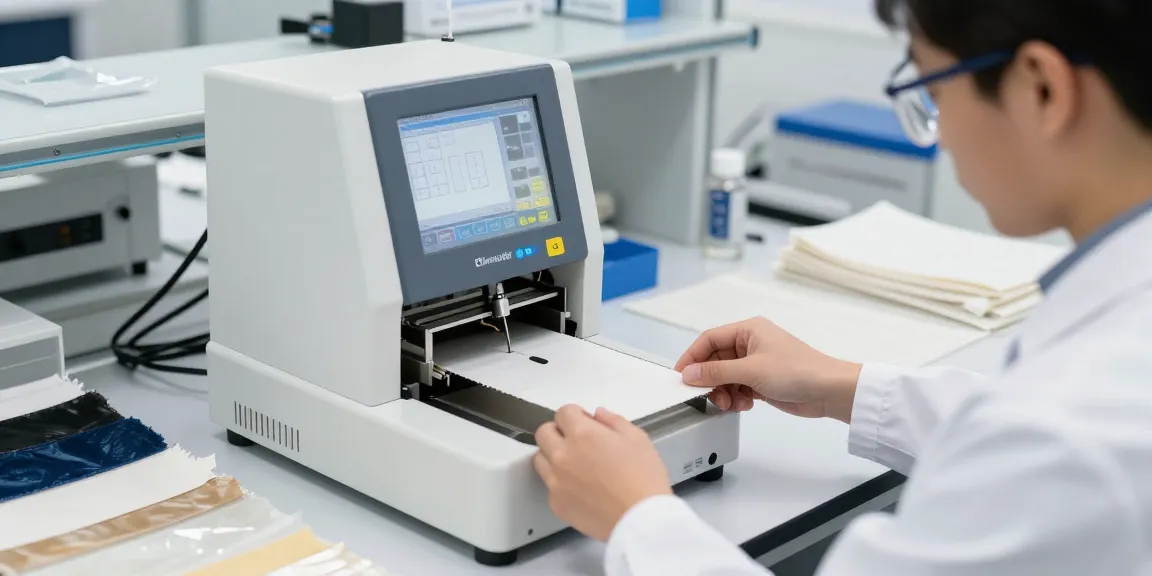
The Elmendorf tear test operates on the ballistic pendulum principle. A sample is clamped securely, and a notch is made in the center. When the pendulum is released, it swings down to tear the sample along the notch. The energy lost during this swing corresponds to the tearing force required, providing a direct measurement of the material's tearing strength.
Step-by-Step Testing Procedure
- Prepare the sample material by cutting it to specified dimensions.
- Secure the sample in the tester’s clamps, ensuring it is held firmly.
- Using the instrument's cutter, create a notch in the material.
- Release the pendulum to initiate the test.
- Record the energy loss as the pendulum swings back, indicating the tear strength.
Key Features of Automated Testing
The ElmenGuide Elmendorf Tear Tester integrates cutting-edge technology, facilitating fast and accurate results. Features such as automatic weight recognition and configuration adjustments remove the need for manual input, significantly reducing the likelihood of errors. This automation streamlines the testing process, enhancing efficiency in laboratory environments.
Applications of Tearing Tests Across Industries
Textile Sector and Fabric Quality Control
In the textile industry, tearing tests are vital for ensuring that fabrics meet quality standards. Manufacturers rely on the Elmendorf test to evaluate materials before they are used in products ranging from clothing to industrial fabrics. By implementing strict testing protocols, companies can avoid costly product returns and maintain brand reputation.
Paper and Plastic Film Testing
The tearing test is essential for assessing the durability of paper products and plastic films, particularly in packaging. Understanding how these materials respond to tearing can enhance product design and functionality, ensuring they perform as expected under various conditions.
Certification and Compliance in Testing Laboratories
Testing laboratories utilize the Elmendorf tearing test to comply with global standards, including ISO 13937-1 and ASTM D1424. Adherence to these standards is crucial for manufacturers seeking quality certification and demonstrates a commitment to producing reliable products.
Benefits of Using the ElmenGuide Tearing Tester
Efficiency and Speed in Testing Processes
The ElmenGuide tearing tester excels in efficiency, drastically reducing testing time. The automated nature of this equipment allows multiple samples to be processed quickly, which is particularly beneficial in high-throughput environments where time is critical.
Precision and Accuracy in Results
One of the standout features of the ElmenGuide tester is its precision, achieving an accuracy of ±0.2%. This level of accuracy is essential for manufacturers who require reliable data to make informed decisions about material selection and quality control.
Enhanced User Experience with Smart Technology
The integration of IoT technology means that operators can access real-time data and testing results directly on their devices. This connectivity facilitates better data management and encourages collaboration across departments, making the testing process not only easier but smarter.
Future Trends in Tearing Test Technologies
Innovations in Textile Testing Equipment
As the textile industry continues to evolve, so will testing technologies. Upcoming innovations may include more sophisticated AI-driven analysis tools that can predict material performance under a variety of conditions, further enhancing product development.
Impact of IoT on Testing Accuracy
The integration of IoT technology into testing equipment is set to revolutionize how data is collected and analyzed. This trend will enhance the accuracy of tearing tests and allow for more comprehensive reporting, making it easier for companies to maintain compliance with industry regulations.
Predictions for 2026 and Beyond in Fabric Testing
Looking ahead, the demand for high-performance fabrics will likely drive the need for advanced tearing tests. As consumer expectations rise, manufacturers will need to adopt the latest technologies to ensure their products meet quality standards, ultimately impacting market competitiveness.
What types of materials can be tested with Elmendorf test?
The Elmendorf tear tester is versatile and can test a wide array of materials, including fabrics, plastics, and various paper products. It is particularly effective for materials where tearing resistance is critical to performance.
How accurate is the Elmendorf tearing strength test?
This testing method provides an accuracy of ±0.2%, making it one of the most precise options available for measuring tearing strength. Such accuracy is essential for applications where even minor variations can significantly impact product performance.
What are the global standards for tearing tests?
The Elmendorf tearing test adheres to several international standards, including ISO 13937-1 and ASTM D1424. Compliance with these standards is crucial for ensuring global acceptance of test results, particularly in international trade.
How does automation improve the tearing test process?
Automation streamlines the entire testing process, reducing manual errors and increasing throughput. Automated features such as weight recognition and integrated data logging eliminate unnecessary steps, allowing technicians to focus on analysis rather than data entry.